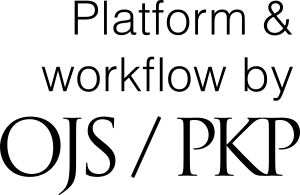
Artificial Intelligence through the Eyes of Juan José Saer, a Counterfactual Reading
DOI:
https://doi.org/10.18485/beoiber.2025.9.1.7Ključne reči:
Juan José Saer’s poetics–Post-Borges age, Argentine literature, literature and AIApstrakt
This article suggests a “counterfactual” reading of the works of Juan José Saer (1937-2005), inspired by the analysis of the works of Jorge Luís Borges (1899-1986) and Julio Cortázar (1914-1984) conducted by Vraneš (2024). Given that the year 2025 has been declared in Argentina as the year of Saer, this article has a twofold goal: paying tribute to Juan José Saer and sketching an answer to the following question: How would Saer regard the current practice of using artificial intelligence (AI) to generate literary texts?
Reference
Adorno, Theodor. Aesthetic Theory. London; New York: Continuum, 2004.
Amícola, José. “La literatura argentina desde 1980: nuevos proyectos narrativos después de la desaparición de Cortázar, Borges y Puig.” Revista Iberoamericana, vol. LXII (1996): pp. 427-438. https://doi.org/10.5195/reviberoamer.1996.6290
Benítez Pezzolano, Herbert. “Encrucijadas de la objetividad.” Historia crítica de la literatura argentina. La narración gana la partida. T. XI. Elsa Drucaroff (ed.). Buenos Aires: Emecé Editores, 2000. pp. 143-160.
Corbatta, Jorgelina. Juan José Saer: arte poética y práctica literaria. Buenos Aires: Corregidor, 2005.
Díaz Quiñones, Arcadio. “Pequeño atlas de la poética de Juan José Saer.” Rencontre avec Juan José Saer. Milagros Ezquerro (ed.). Montpellier: CERS, 2002. pp. 9-37.
Drucaroff, Elsa (ed.). Historia crítica de la literatura argentina. La narración gana la partida, t. XI. Buenos Aires: Emecé Editores, 2000.
Even-Zohar, Itamar, Elias J. Torres Feijóo, y Antonio Monegal. “The End of Literature; or, What Purposes Does It Continue to Serve?” Poetics Today, vol. 40, no. 1 (2019): pp. 7–31. https://doi.org/10.1215/03335372-7259859
Fabbrini, Federico, y Edoardo Celeste. “The Right to Be Forgotten in the Digital Age: The Challenges of Data Protection Beyond Borders.” German Law Journal, vol. 21, issue S1 (2020): pp. 55-65. Cambridge Core. https://doi.org/10.1017/glj.2020.14.
Gasquet, Axel. La literatura expatriada: conversaciones con escritores argentinos de París. Santa Fe: Universidad Nacional del Litoral, 2004.
González, Horacio. “Reportaje a Juan José Saer.” Revista Lote, núm. 10 (1998): pp. 16-23.
Guéguen, Perrine . «La negatividad intransigente de Saer». Cuadernos LIRICO [En línea], vol. 19 (2018). http://journals.openedition.org/lirico/6776
Keen, Suzanne. Empathy and Reading: Affect, Impact, and the Co-Creating Reader. New York, NY: Routledge, 2022.
Lucero, Nicolás. La vuelta incompleta. Saer y la novela. Buenos Aires: Santiago Arcos Editor, 2017.
Manzi, Joaquin. “Huéspedes de la intemperie.” Recontre avec Juan José Saer. Milagros Ezquerro (ed.). Montpellier: Éditions du CERS, 2002. pp. 61-76.
Martínez Pinzón, Felipe. “El anti-bestseller saeriano: horror y complot en ´Lo imborrable´ de Juan José Saer.” LL Journal, vol. 2, núm 1 (2007). https://lljournal.commons.gc.cuny.edu/2007-1-martinez-pinzon-texto/
Policsek, Cecilia. “Manejo del discurso crítico en el contexto artístico en Juan José Saer.” PhD Dissertation. Universitet i Bergen, 2009.
―. “The Poetics of Negativity as a Form of Seeing Literature: The Witness by Juan José Saer.” Neophilologus, vol. 97 (2013): pp. 1–8. Springer Nature Link. https://doi.org/10.1007/s11061-012-9313-5
Poulet, Georges. “Criticism and the Experience of Interiority.” Reader-Response Criticism. From Formalism to Post-Structuralism. Jane Tompkins (ed.). Baltimore: Johns Hopkins University Press, 1989. pp. 41-49.
Riera, Gabriel. Littoral of the Letter. Saer’s Art of Narration. Lewisburg: Bucknell University Press, 2006.
Saer, Juan José. El concepto de ficción. Buenos Aires: Ariel, 1998.
―. La narración-objeto, Buenos Aires: Seix Barral, 1999.
―. El entenado. Buenos Aires: Editorial Planeta, 2000.
―. Lo imborrable. Buenos Aires: Seix Barral, 2003a.
―. El río sin orillas. Buenos Aires: Seix Barral, 2003b.
Scavino, Dardo. Saer y los nombres. Buenos Aires: El Cielo por el asalto, 2004.
Solotorevsky, Myrna. “’La mayor’ de Juan José Saer y el efecto modelizador del Nouveau Roman.” Neophilologus, vol. 75 (1991): pp. 399-407. Springer Nature Link. https://doi.org/10.1007/BF00406705
Speranza, Graciela. Primera persona. Conversaciones con quince narradores argentinos. Barcelona, Buenos Aires, Caracas: Grupo Editorial Norma, 1995.
Stan, Corina. “Visions of the End of Culture: Civilization, Barbarism, and the Place beyond Forgiveness.“ Arcadia, vol. 50, no. 1 (2015): pp. 118-145.
Vraneš, Ksenija. “Artificial Intelligence and the Challenge to Human Literature: Revisiting Borges and Cortázar.” Beoiberística, Vol. VIII. Núm. 2 Escritores argentinos, tradición, y literatura mundial: Borges y Cortázar (2024): pp. 285-307. https://doi.org/10.18485/beoiber.2024.8.2.14
Yonck, Richard. Heart of the Machine. Our Future in a World of Artificial Emotional Intelligence. New York, NY: Arcade Publishing, 2020.
Downloads
Objavljeno
Broj časopisa
Rubrika
Licenca
Sva prava zadržana (c) 2025 Cecilia Policsek

Ovaj rad je pod Creative Commons Autorstvo-Deli pod istim uslovima 4.0 Internacionalna licenca.
Autori koji objavljuju u ovom časopisu pristaju na sledeće uslove:
- Autori zadržavaju autorska prava i pružaju časopisu pravo prvog objavljivanja rada i licenciraju ga pod okriljem Creative Commons Attribution-ShareAlike 4.0 International License koja omogućuje drugima da dele rad uz uslov navođenja autorstva i izvornog objavljivanja u ovom časopisu.
- Autori mogu da izrade zasebne, ugovorne aranžmane za ne-ekskluzivnu distribuciju rada objavljenog u časopisu (npr. postavljanje u institucionalni repozitorij ili objavljivanje u knjizi), uz navođenje da je rad izvorno objavljen u ovom časopisu.
- Autorima je dozvoljeno i podstiču se da postave objavljeni rad on-line (npr. u institucionalnom repozitoriju ili na svojim mrežnim stranicama) pre i tokom postupka prijave, s obzirom na to da takav postupak može voditi produktivnoj razmeni ideja, te ranijoj i većoj citiranosti objavljenog rada (up. The Effect of Open Access).